10 E-Commerce SEO Mistakes Stores Make (And How to Fix Them)
The 10 most common e-commerce SEO mistakes silently capping your traffic, and the specific fix for each. Audit, prioritize, and ship results in 30 days.
E-commerce SEO mistakes are the silent margin-killers of online retail. The store ranks fine for branded terms, traffic looks acceptable, the team feels productive, and meanwhile competitors with worse products are stealing search share for the queries that actually drive sales. According to Ahrefs' 2024 ecommerce content study, 91 percent of pages get zero organic traffic from Google. Most of those pages are fixable. They just have one or two specific e-commerce SEO mistakes baked in that quietly cap their potential. The answer is rarely a complete site overhaul. It is almost always a punch list of small, specific fixes. This guide walks through the ten that come up most often, with the actual fix for each.
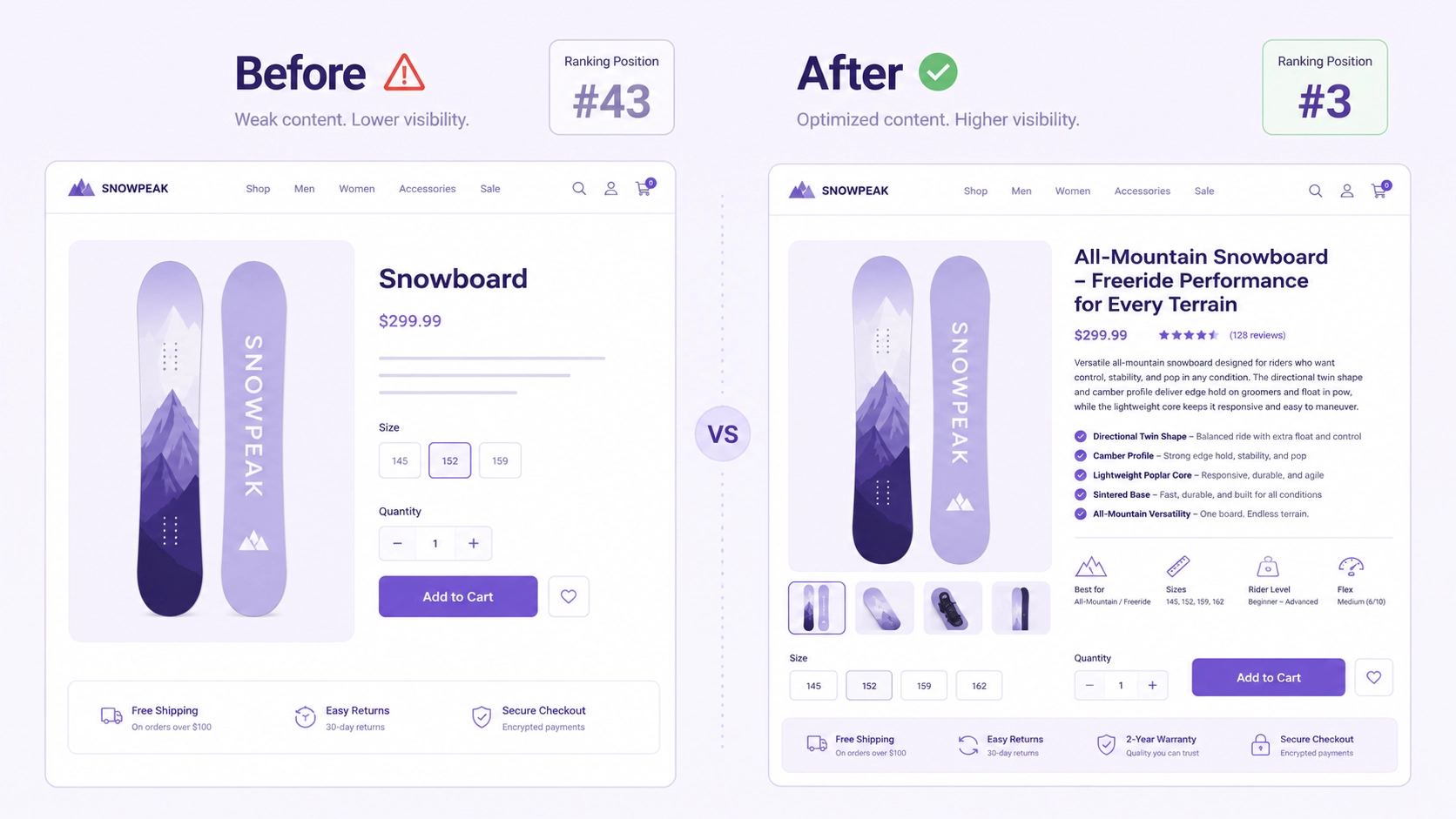
Why most e-commerce SEO advice misses the mark
The advice you read on most SEO blogs treats e-commerce like a content site. Write more posts. Chase keywords. Build backlinks. None of that is wrong, but it misses what makes e-commerce different: the money pages are product and category pages, not blog content. The mistakes that hurt sales are usually structural problems with how product information is organized, not gaps in your content marketing. The best ROI moves are fixing the basics across hundreds of products, not writing one more buying guide. Studies indicate that a typical Shopify store has 60 to 80 percent of its product pages misconfigured in some technical way. That is the real opportunity. Once you see it, the rest of this guide is a checklist.
Mistake #1: Treating product pages like brochures
The fix to the most common e-commerce SEO mistake is also the most boring: rewrite your product descriptions to answer search questions, not impress your design team. Brochure copy describes the product. Search-friendly copy answers the question someone typed before they landed on the page. Compared to a brochure-style description, search-friendly copy includes specific use cases, common objections handled in plain language, and the technical details Google's crawler reads as relevance signals. Audit five of your top product pages this week. If they read like marketing brochures, that is where to start.
Mistake #2: Copy-pasting manufacturer descriptions
Identical product descriptions across hundreds of stores create exactly the duplicate content problem Google penalizes. If you sell brands you do not make yourself, the manufacturer's description that came in the product feed is also on every competitor's site. Search engines pick one canonical version and bury the rest. According to Moz's research on duplicate content, ecommerce duplicates account for nearly a third of indexation issues across mid-sized stores. The fix is rewriting in your store's voice, even briefly. Add 2 to 3 store-specific paragraphs per product covering fit, use cases, or compatibility with your other products.
Mistake #3: Ignoring search intent on category pages
Category pages are the highest-traffic SEO real estate most stores ignore. They sit between brand searches and product searches, and they get traffic for queries like "women's running shoes" or "organic dog food." Most stores leave them as bare grids of products with a generic 100-word intro. Better category pages include filters that match buyer language, FAQ sections answering common questions about the category, and a buyer's guide style introduction that signals topic relevance. These pages can outrank competitors' best blog content because they match commercial intent more directly than any blog post will.
Mistake #4: Skipping internal linking between products
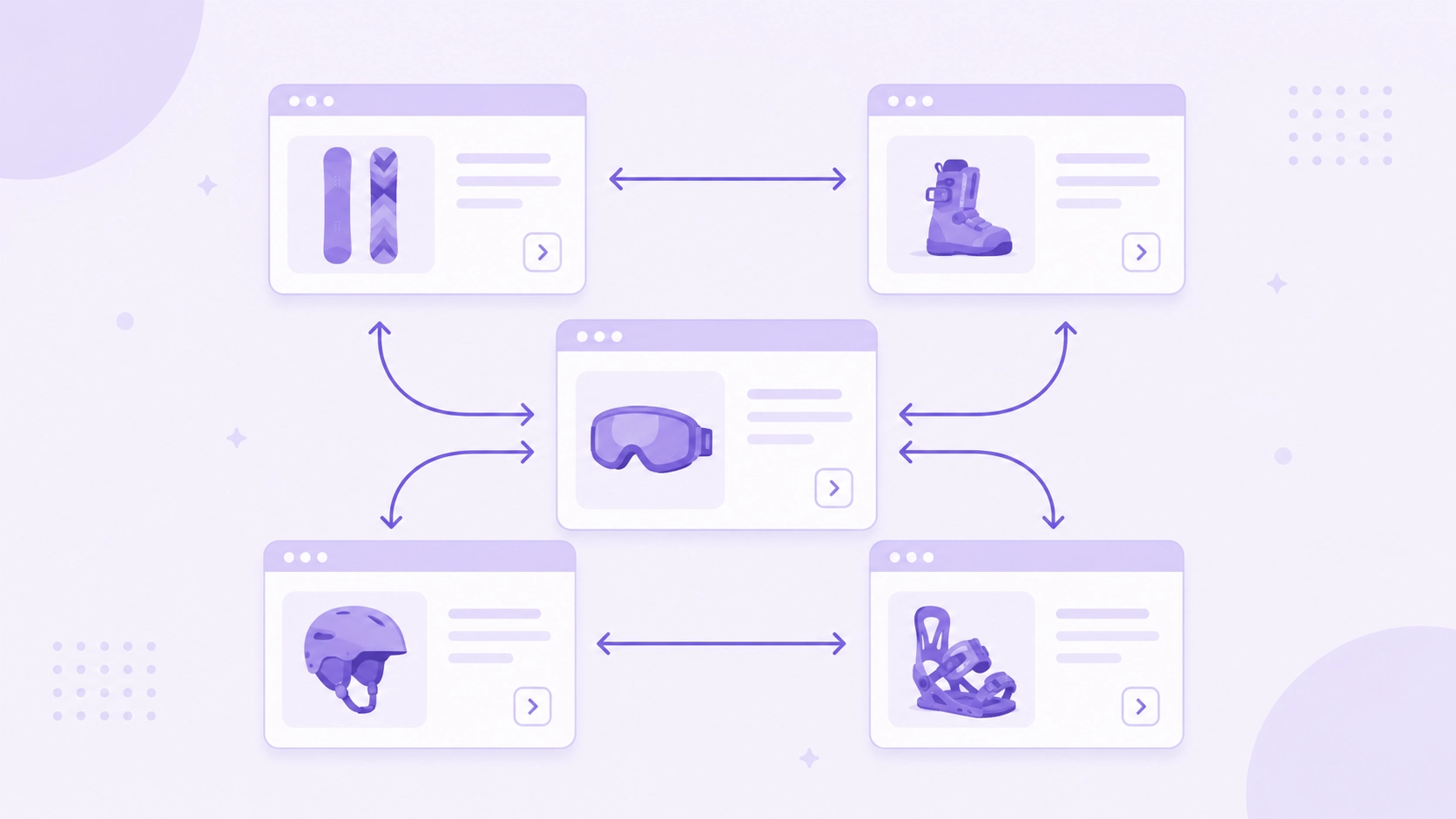
Each product page in your store should link to 2 to 3 related products in body content, not just in "You may also like" grids. Internal links pass authority. They also help search engines understand which products are closely related, which strengthens topic clustering. Most stores have zero contextual internal links inside product descriptions. Therefore, adding "pairs well with" or "compare to" callouts with anchor text inline lifts the authority of the linked-to pages. This is one of the highest-ROI e-commerce SEO mistakes to fix because the work scales linearly with cataloging.
Mistake #5: Overlooking image alt text and file names
Image alt text is one of the few SEO inputs that is free, fast, and still moves the needle. Most stores either skip alt text entirely or use the product title as alt for every image. Better practice: include a short descriptive alt text per image that mentions the product feature visible in that specific image. File names also matter. "IMG_4827.jpg" tells search engines nothing. "red-running-shoes-side-view.jpg" tells them everything. According to Google's image search guidelines, descriptive file names contribute to image search ranking and accessibility scoring.
Mistake #6: Letting site speed slip on mobile
Mobile site speed has been a confirmed Google ranking factor since 2018. In short, slow stores rank worse, period. Most ecommerce sites accumulate speed regressions over time as new apps and tracking pixels get added. The fix is auditing speed quarterly with Google PageSpeed Insights or GTmetrix and removing the heaviest unused assets. Compared to a fully optimized store, an average Shopify site loses 15 to 20 percent of its mobile speed score within 90 days of theme updates. Run a check today. If your mobile score is below 60, you have a fix that pays off in weeks.
Mistake #7: Forgetting to fix broken links after sales end
Limited-time products and seasonal sales create dead links across your site every quarter. Old promotional landing pages, retired SKUs, sale pages, they all leave 404s that search engines downgrade. Most stores never audit for these. Set up a simple monthly process: pull a 404 report from Google Search Console, decide whether to redirect to a category page or restore the URL, and set up 301s for the redirects. The work takes one hour a month and prevents authority leakage that compounds over years. Stores that audit consistently rank measurably higher for evergreen product categories.
Mistake #8: Stuffing keywords into every meta description
Meta descriptions do not directly affect rankings, but they affect click-through rates, which indirectly affect rankings over time. The mistake is treating them as keyword storage instead of mini-ads. Better practice: write meta descriptions like search ad copy. Lead with the benefit, include one specific detail (size, material, price tier), and end with a clear value proposition. Compared to keyword-stuffed descriptions, conversion-focused meta descriptions improve organic CTR by 20 to 30 percent in most niches. The traffic boost over six months often outpaces what an extra ranking position would deliver.
Mistake #9: Publishing thin blog content as SEO bait
This is the e-commerce SEO mistake that wastes the most time. Stores hire freelancers to write 800-word blog posts targeting random keywords, hoping for traffic. Most never rank. The blog posts that work for ecommerce are deeply tied to the products you sell, target buyer-intent keywords, and include genuine product mentions with internal links. Research shows that ecommerce blog content driving conversions is 2.5 times longer on average and includes 3 to 5 internal product links per article. Generic content marketing advice does not work for stores. Product-aware content does.
Mistake #10: Not tracking which fixes actually moved rankings
Most stores skip the measurement step entirely. They make changes, hope traffic improves, and abandon experiments without knowing which fix worked. The key is setting up a simple tracking habit: tag each SEO change in Google Search Console annotations or a shared spreadsheet, wait 30 to 60 days, and compare ranking shifts. Without measurement, fixing e-commerce SEO mistakes turns into guesswork. With it, the next 90 days of work compound on the wins from the last 90. Focus your time on fixes you can prove worked.
Key Takeaways
Summary of the 10 e-commerce SEO mistakes covered:
- Product pages should answer questions, not describe features (Mistakes 1-2)
- Category pages and internal links are underused authority drivers (Mistakes 3-4)
- Technical hygiene matters: alt text, speed, broken links (Mistakes 5-7)
- Meta descriptions and blog content need to match real intent (Mistakes 8-9)
- Track what works to compound future wins (Mistake 10)
The bottom line is that e-commerce SEO mistakes rarely come from missing one big thing. They come from accumulating small structural issues across hundreds of pages. Fix them systematically and the traffic compounds.
Where to start fixing your site this week
Pick three mistakes from this list that match where you spend the most time. For most stores, that means rewriting product descriptions on the top 20 products (Mistakes 1-2), auditing the slowest mobile pages (Mistake 6), and setting up a monthly broken-link sweep (Mistake 7). Set a 30-day timer. Pick one fix per week. Measure the change in Search Console at day 60. The teams that win at SEO are not the ones doing more, they are the ones doing the right things consistently and tracking the results. If you are looking at how AI tools fit into this workflow, our complete guide to AI-powered content marketing covers the framework, and Riten AI connects directly to your Shopify catalog to handle the descriptions side at scale.
Ready to Create Your Own Blog Content?
Generate AEO and SEO optimized blogs that AI assistants can cite, in minutes with Riten AI.
Start Free